I. Lost Not Forgotten
Dire wolf
Index Naturae
IN 2.10.21-A
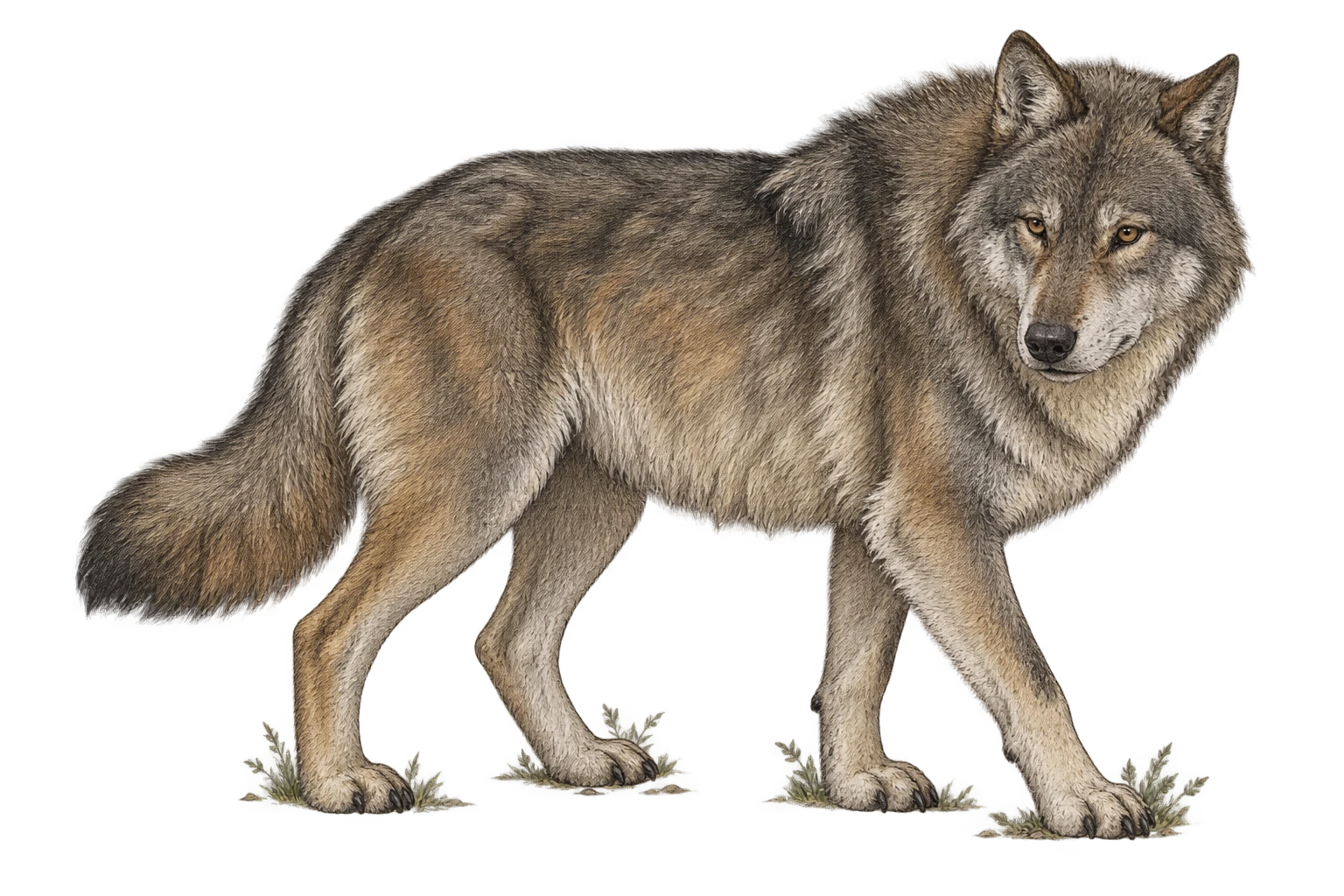
Dire wolf
Aenocyon dirus
Adult portrait
I. Lost Not Forgotten
Field notes
A powerful predator of the Ice Age Americas, the dire wolf occupied habitats ranging from grasslands to open woodland. Fossils record robust jaws and teeth, while ancient DNA reveals a lineage distinct from living grey wolves. La Brea preserves thousands of its remains.
- Former range
- Primarily North and South America
- Habitat
- Grasslands, open woodlands and tropical wetlands
Extinction
Dire wolves vanished around the close of the last Ice Age. Loss of large prey and competition for food are among the proposed pressures, but no single explanation fully accounts for the species' disappearance across its range.
Sources & conservation context
- National Park Service — Dire Wolf
- Nature — Dire wolves were the last of an ancient New World canid lineage
- San Diego Natural History Museum — Dire Wolf
- Natural History Museum of Los Angeles County — The Dire Wolf: An Ice Age Angeleno
Extinct — Global status of the extinct fossil species Aenocyon dirus
Source review: 6 October 2026. Assessment dates, where given, belong to the cited source.