I. Lost Not Forgotten
Woolly mammoth
IN 2.10.19-A
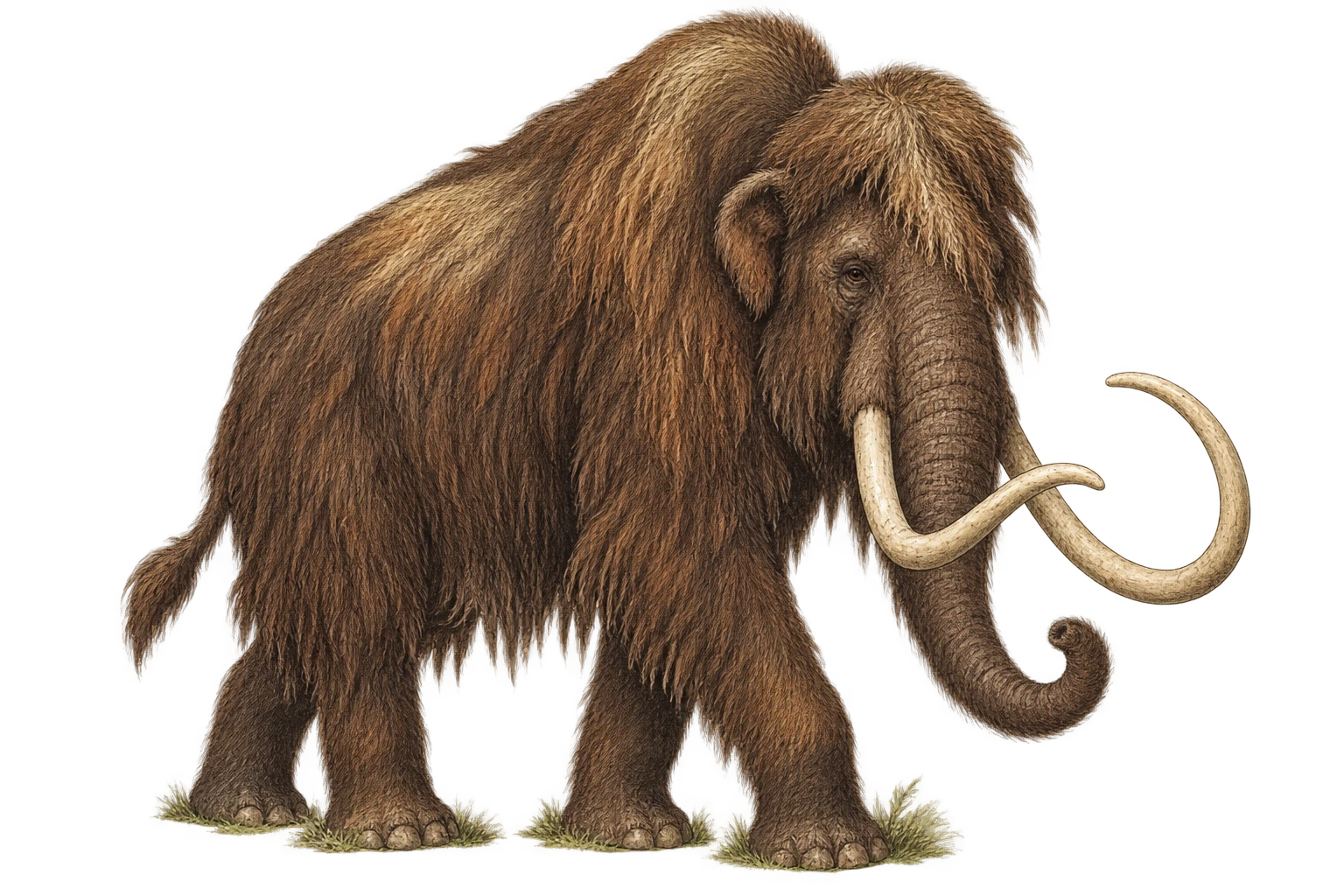
Woolly mammoth
Mammuthus primigenius
Adult portrait
I. Lost Not Forgotten
Field notes
Long hair, small ears and a short tail helped the woolly mammoth conserve warmth across northern grasslands. Its broad, ridged molars ground tough vegetation. Frozen remains and tusks preserve unusually intimate evidence of how this cold-adapted elephant lived.
- Former range
- Northern Eurasia and North America
- Habitat
- Cold, open grasslands and herb-rich steppe-tundra
Extinction
Woolly mammoths disappeared from different regions at different times as environments changed, with human hunting also a possible contributor. The last known population survived on Wrangel Island until about 4,000 years ago; its final extinction cause remains unresolved.
Sources & conservation context
- Yukon Beringia Interpretive Centre — Woolly Mammoth
- Nature Communications — Pattern of extinction of the woolly mammoth in Beringia
- Stockholm University — New genetic study reveals the woolly mammoths’ journey towards extinction
Extinct — Global species status: woolly mammoth, not all mammoths collectively
Source review: 6 October 2026. Assessment dates, where given, belong to the cited source.