I. Lost Not Forgotten
Passenger pigeon
IN 1.45.02-J
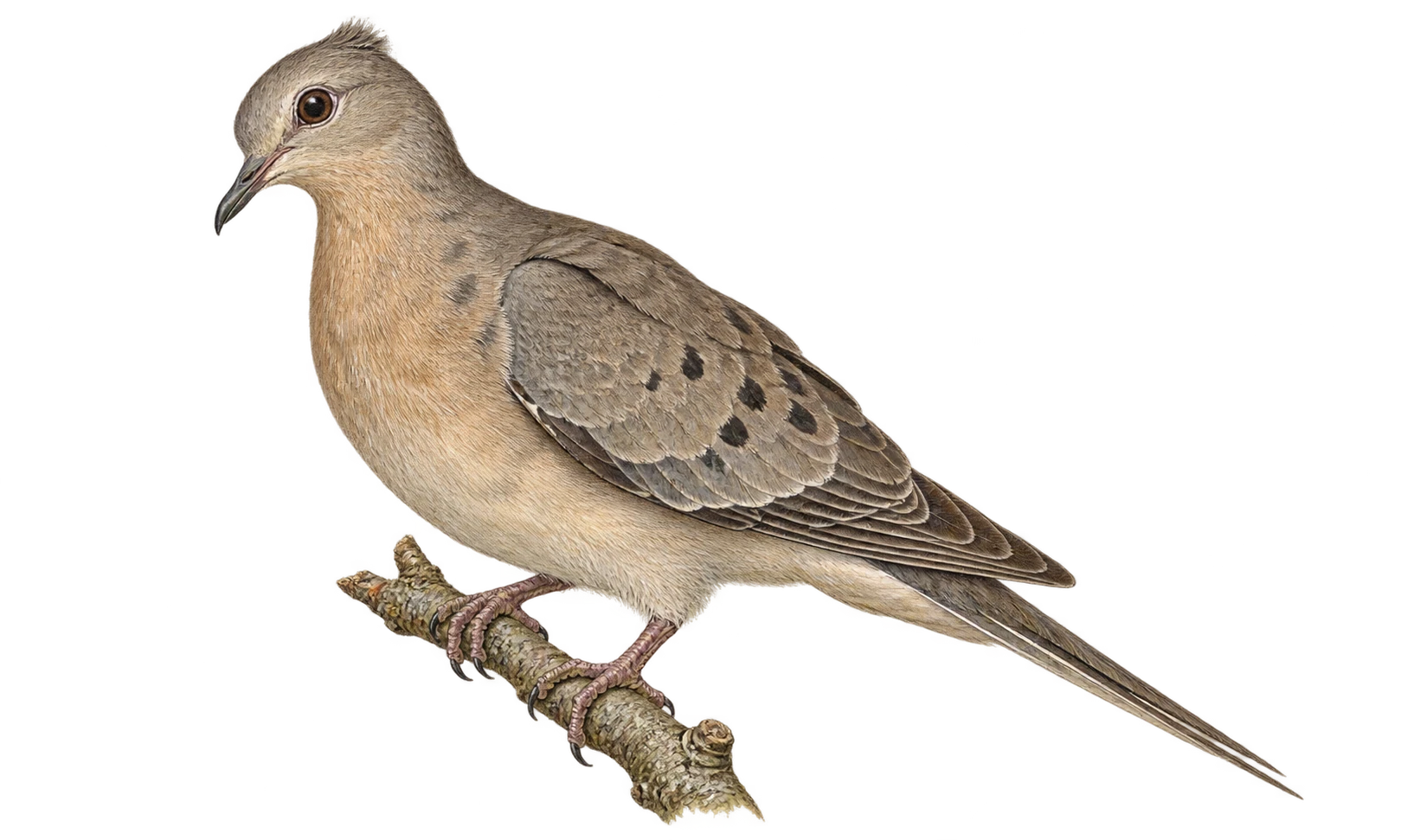
Passenger pigeon
Ectopistes migratorius
Young portrait
I. Lost Not Forgotten
Field notes
Passenger pigeons moved across eastern North America in immense flocks, following crops of acorns, beechnuts and chestnuts. They also nested in vast colonies. Their lives depended on forests and on numbers so great that contemporary observers struggled to imagine their disappearance.
- Former range
- Eastern North America, with wider seasonal movements
- Habitat
- Extensive deciduous forests with abundant tree-seed crops
Extinction
Commercial hunting and forest clearance caused a catastrophic nineteenth-century decline. Martha, the last known passenger pigeon, died at Cincinnati Zoo on 1 September 1914. Her preserved remains are held by the Smithsonian.
Sources & conservation context
- Natural History Museum — Passenger pigeon: How the world’s most common bird went extinct
- American Museum of Natural History — Passenger Pigeons: Gone Today but Once Abundant
- Smithsonian National Museum of Natural History — Martha, the Last Passenger Pigeon
Extinct — Global species status: Ectopistes migratorius
Source review: 6 October 2026. Assessment dates, where given, belong to the cited source.